Tuesday, 15 December 2020

Contemporary Identities, Issue 8


 The latest issue of the online contemporary art magazine, Contemporary Identities features my profiles on two hugely talented artists, 
Rachael Kantaris and Paul Wadsworth,
both of whom live and work in Cornwall, UK. 


Tuesday, 15 September 2020

Contemporary Identities, Issue 7

 The latest issue of the online contemporary art magazine, Contemporary Identities features my profiles on two amazing artists: Afra Al Dhaheri and Sax Impey, both of whom have worked in the Porthmeor Studios in St Ives! Have a look 

Monday, 30 September 2019

Thursday, 17 January 2019

After Darkness: Social Impact and Art Institutions

Review of the exhibition by photographer Abbie Trayler Smith 

Museum Worlds Journal
Volume 6 (July 2018) Issue 1 - p.132-138


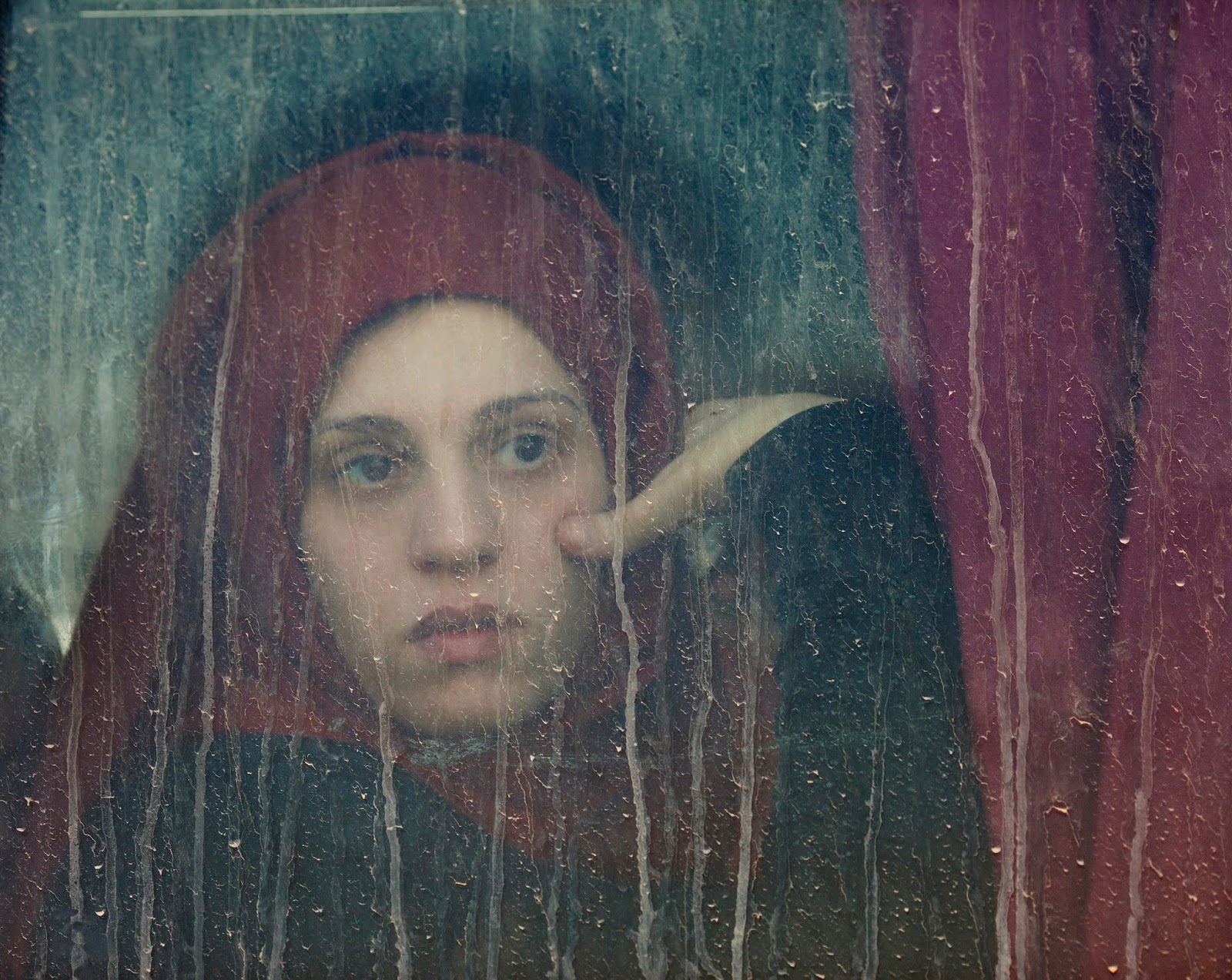
The photographer Abbie Trayler Smith traveled to Iraq in the autumn of 2016, after the Islamic-State-controlled areas of Northern Iraq, as far as the city of Mosul, had been liberated by allied forces. She traveled with Oxfam Iraq to cover the humanitarian situation and the problems that refugees and “ISIS widows” faced, as they were living in makeshift camps before they attempted to return to their homes. Many of her digital C-type photographs in the After Darkness series portray frozen moments in time: a bedraggled mother, arms around her fair-haired children as a black cloud from burning oil fills the sky behind her; waves of dirt and sand on the window of one of the rickety buses that transported people from one horrific situation to the next; a disfigured child standing with her mother and father; and countless other pictures of women and children surrounded by annihilation and devastation. Beside each picture, Trayler Smith has added a short description or story to give the viewer an idea of the context of each photograph. And this is what she has to say about her motivation.


Tuesday, 12 June 2018

"Museums of the Future - Editorial Interview" in Museological Review 22

Summer 2018

The theme of this year's Museological Review is Museums of the Future.
As a member of the editorial team for this peer-reviewed journal, edited by post-graduate students of the School of Museum Studies, Leicester University, I am grateful to have featured my friend, Valerie Hillings, Associate Director of Curatorial Affairs for the Solomon R Guggenheim Foundation Abu Dhabi Project and Maisa Al Qassimi, Programmes Manager at the Guggenheim Abu Dhabi in the Editorial Interview on Museums of the Future (page 5-8).

More


Sunday, 3 June 2018

Chief of Chiefs - The Father of A Nation

To celebrate the centenary of the birth of HH Sheikh Zayed, the founder of the United Arab Emirates, I was honoured to have this article published in The Camden Magazine, an independent magazine linked to Westminster School, of which I am an alumnus.


Monday, 23 April 2018

Meditations on the Temporariness of Refugee Life


Permanent Temporariness is the exhibition which opened at NYU Abu Dhabi Art Gallery on 24 February 2018. It is an exploration of the enduring permanence of the refugees environment and the concept of ‘temporary people’, by award-winning, research architecture duo Sandi Hilal and Alessandro Petti.
Until 2014, Hilal worked within the United Nationals Relief and Works Agency for Palestine Refugees in the Near East and she continues to work around the refugee problem for the Swedish Public Art Agency, in northern Sweden, and leads the ‘spaces for hospitality’ initiative in Stockholm, with the support of the Arab Foundation for Arts and Culture (AFAC) and the Modern Museet.
Petti is a Professor of Architecture and Social Justice at the Royal Institute of Art in Stockholm and was a Loeb Fellow at Harvard University in the United States. Together, they founded the Decolonizing Architecture Institute (DAi) with Eyal Wizman in 2007, a project that explores the political use of land as a tool for colonization. They also created the Campus in Camps educational project, aimed at democratizing knowledge and educational structures within the Dheisheh Refugee Camp in Bethlehem. 
 
The Dheisheh Camp, the world’s oldest refugee camp, was the inspiration for one of the works in the exhibition: ‘Refugee Heritage’. ‘Refugee Heritage’ is an installation of a series of lightbox-mounted photographs taken by an official UNESCO photographer in the historic Dheisheh camp, in Bethlehem. The photographic installation explores the politics of space and time, as well as the paradoxical permanence of temporary spaces. Though quickly assembled as a temporary living solutions for displaced families, camps such as Dheisheh became permanent homes for generations of families.
‘Common Assembly’ is a video installation and concrete steps which comments on the ironically permanent nature of the crude structural assemblage that occurs in the refugee environment. Built out of necessity and hastily assembled, the moveable concrete steps that seem to lead nowhere, like other temporary camp structures and the refugees’ life in general, lack the careful planning and painstaking assemblage that would be given to a house or lifestyle that was not caught in this transitory political and economic situation.

Permanent Temporariness is a moving collection of works that strike at the very core of human existence. The exhibition includes several installation, performance and sound works in the gallery and other installation works spread out over the NYUAD campus. The breadth of the exhibition emphasises the boundlessness of the refugee problem, as well as Hilal and Petti’s artistic expression and creativity.

Outside the university’s dining area, ‘The Concrete Tent’ is a monumental structure, which plays on the paradox of permanent temporariness - a concrete house in the form of a tent, with billowing, curved walls belying the unwelcoming temporariness and limited confines of a refugee family’s home. There is a sad irony to ‘The Concrete House’ and it can, of course, be understood on so many different levels.

Salwa Mikdadi, Co-curator of the exhibition and NYU Associate Professor of Art History, has presented Hilal and Petti’s work at the Venice Biennial in 2009 as part of the Palestine Pavilion. Mikdadi suggests that the Permanent Temporariness works offer ‘the audience new ways of engaging with this critical and timely topic’.
Her co-curator, Bana Kattan, curator of the NYU Abu Dhabi Gallery sees the exhibition as a ‘large-scale, meditative retrospective’. Adding that Hilal and Petti’s work is, ”both locally relevant and internationally significant, and this subject matter is particularly resonant now.”

Permanent Temporariness is a beautifully contemplative exhibition of works that belie not only the stark reality of human transience, but also the resourcefulness and hopefulness of the human spirit.

 The exhibition will be accompanied by a full programme of talks and events – see: http://www.nyuad-artgallery.org/

Friday, 20 April 2018

Saponification in Saida

Saponification is the term used to describe the creation of soap from oils. The Audi Foundation's historic Soap Factory in the historic town of Saida (Sidon) in South Lebanon is the ideal place to learn about the traditional art of soap-making. This was often practiced by women of the region, using home-pressed olive oil, ashes and water from the well. It was also made commercially for sale in larger towns or for export abroad.


The museum, which is located in Saida's ancient souk (market) explores the week-long process of making soap: the two days needed to prepare a caustic water solution from ashes, lime and water in fermentation pits; and the five or six days that the solution needed to be heated at a very high temperature, to separate the impurities and un-disolved oils and create a soapy paste. When cooled, this paste was cut with a wire thread, then it could be moulded into shape or stamped with a design and then dried in round, spherical stacks.


A wonderful video of the museum can be found here: http://www.discoverlebanon.com/en/panoramic_views/south/saida/view_khan-saboun.php


Where Art Meets The Sea

Harpers Bazaar Art, Issue 30, Spring 2018

An exhibition exploring the history of Modern art in St Ives
Sophie Kazan ponders the aesthetic and philosophical commonalities inherent in 20th century works.


Monday, 26 March 2018

Wednesday, 29 November 2017

Wednesday, 28 June 2017

SHARJAH: A UAE MUSEUM PARTNERSHIP

Sharjah: A UAE Museum Partnership

Though Sharjah is not as familiar to visitors of the United Arab Emirates (UAE) as Dubai or Abu Dhabi, with their international art fairs and cutting-edge art galleries, it nevertheless has an impressive history of museum traditions and development. This paper focuses on Sharjah and considers why and how the Sharjah Museums Department (SMD), a partnership of 16 diverse museums and cultural locations was created in 2006. The SMD, now the Sharjah Museums Authority (SMA) occupies a vital place in Sharjah’s civic make-up, leading local initiatives and promoting learning within the emirate.

Museological Review  -    Issue 21  -  pp23-33  Read more


  Museological Review  -    Issue 21  -  pp23-33  Read more

Tuesday, 23 May 2017

IMPERFECT CHRONOLOGY: THE BARJEEL ART FOUNDATION COLLECTION

The Barjeel Art Foundation Collection at the Whitechapel Gallery, London.
[Tribe Magazine - Issue 03/2016]


Monday, 13 June 2016

CALIFORNIA DREAMING

Mary Heilmann: Looking at Pictures
[8 June - 21 August 2016 at the Whitechapel Gallery, London


Last week, Mary Heilmann: Looking at Pictures opened at the Whitechapel Gallery in London. This exhibition of some fifty paintings, ceramics and sculptures, charts the past 50 years of this American artist’s life, which began in 1940 in Southern California. The sunshine and colours of the Sunshine State permeate her work, despite her moving to New York City in the late 1960s and 1970s where she met and worked with many of the well-known ‘Factory’ artists and musicians of the day.
Heilmann’s early works, the linear sculptures, glossy painted ceramics and large canvases are colourful and geometric in their abstract design. 


The Big Dipper, 1969
The Big Dipper, 1969 is a charming painted non-fired clay sculpture, decorated with silver lead foil and paint which is reminiscent of the flashing lights and loops of an amusement park ride or indeed a shimmering ocean wave crashing onto a shore at night.
Little 9x9, 1973
A practical person, Heilmann studied poetry, ceramics and sculpture in California in the 1950s and early 1960s and then, she says, she abandoned sculpture in favour of painting after she realised that she would be more successful as a woman artist than as a woman sculptor. As time went on, one can see the sculptor in her paintings; Little 9x9, 1973, is a square canvas painted in red and crossed with dark grid lines, which Heilmann may have drawn with her finger, working against any rigid regularity of the flat, two-dimensional plane. 

She brings life and experience to her paintings; The Thief of Baghdad, 1983 is an example of Heilmann’s use of memories, music and film references in her work, to draw out colours, concepts and feelings. In this canvas, coloured, jewel-like rectangles emerge from a dark canvas, in tribute to the epic technicolour film of the same name, that was set in the magical and mysterious East.

Influenced not only by popular culture, the creative and artistic world around her, Heilmann’s work shows great reverence to two artists in particular, Matisse and Mondrian. Could this be the ‘Looking at Pictures’ that the title of the exhibition suggests? Two of Heilmann’s tributes to their work, Little Mondrian, 1985 and Matisse, 1989 see her using similar bold colours as the masters, grid-like colours for Mondrian inspired piece and soft, organic bends for that inspired by Matisse. In each, however, she has added her own bright three-dimantional style of colours and not-quite-straight lines.

Music of the Spheres, 2001 and Crashing Wave, 2011 painted by the artist in later years, sees her fusing the different treatment of form and colour that she explored earlier in her career, to create the vivid and lively style, which is her own. Though Heilmann’s art has shown some shifts in style and emphasis as her eye has turned to the work of great artists or ideas of the time, (‘Looking at Pictures’) her bright, inclusive and generous treatment is unmistakeable, as she expresses the people and places around her, transforming them onto the canvas.


As I visit the gallery, the artist, Mary Heilmann herself sits in the exhibition, on one of the ice-cream coloured chairs that she has designed and had placed in the gallery around her works. Her easy charm and the off-hand manner in which she drops names such as Warhol and Hockney when reminiscing about her time at Berkeley University and in New York, are both endearing and impressive. 


Like the artist herself, Mary Heilmann: Looking at Pictures will make you smile as the bright colours, cheery shapes and playful lines transport you to this Californian artist’s sunny and uplifting life in pictures.

Tuesday, 23 February 2016

Full Bodied Falmouth

[Cornwall Life, February issue]
Sophie Kazan heads to Yallah Coffee Roastery for a hit of real flavour.


Saturday, 4 April 2015

‘A GLIMPSE OF ANOTHER WORLD’: ZAHA HADID’S MOBILE ART PAVILION

This review of the Mobile Art Pavilion (MAP) designed by Zaha Hadid for the fashion house Chanel considers the innovative form, materials and space of the building, and ponders the irony of its permanent installation in the grounds of Paris’ Institute of the Arab World.


Wednesday, 25 February 2015

Eastern Promise

Delicious European Patisserie from ShutiShuti Bakery in Falmouth - article in Cornwall Today Magazine.

Friday, 10 October 2014

Convergence of Creativity: Fashion and Art

(Masquerade Magazine - Issue 5, March 2014)

This article was hard work - it was also the most fun I have ever had researching and writing an article: I met lots of new people, such as the team at Sa*ce; I learnt lots of new facts about metalwork snakes from the team at Johnny Farah in Beirut; and it was a fantastic opportunity to get back in touch with the wonderful Amr Ali (Body Amr).


If You Only Visit One Museum in Paris

(W Magazine, 2012)


Trouble Meets Trouble

(Cornwall Life, October 2013)

Stephen Chambers is an award winning painter and print maker. While his work has been shown in numerous galleries around the world, in this country, chambers has reached the highest echelons of the art world, having been elected a Royal Academician in 2005, he was offered a solo exhibition at the Royal Academy in London, in 2012.